
Best areas to live in Dubai for newcomers

Dubai has no single ‘best’ neighbourhood, the right area depends on how you work, whether you have a family, how much you value walkability, and what you’re prepared to spend on rent. What follows is a clear rundown of the areas newcomers most seriously consider, and what each one actually delivers.
How do Dubai’s main areas compare?
| Area | Character | Metro? | Best for |
|---|---|---|---|
| Downtown Dubai | Urban, landmark-dense | Yes (Red Line) | Professionals, DIFC proximity |
| Business Bay | Commercial, mixed-use | Yes (Red Line) | Founders, short commutes to DIFC |
| Dubai Marina | Waterfront, high-rise | Yes (Red Line) | Young professionals, active lifestyle |
| JBR / The Walk | Beach-facing, walkable | Yes (Tram + Metro) | Those prioritising outdoor lifestyle |
| Jumeirah / Umm Suqeim | Low-rise, beachside villas | No | Families, longer-term residents |
| Dubai Hills Estate | Green, suburban | No | Families, villa living near schools |
| Arabian Ranches | Gated, quiet | No | Families wanting space and calm |
| Mirdif | Established, affordable | Not yet (Blue Line due 2029) | Families on a more modest budget |
| Palm Jumeirah | Prestige, island | Monorail only | Those prioritising address and views |
| DIFC / City Walk | Urban, walkable | Partial | Finance professionals, minimal commute |
Downtown Dubai and Business Bay, the commercial core
Downtown is built around the Burj Khalifa and Dubai Mall, which makes it feel like a city centre in a way that few other parts of Dubai do. Business Bay sits immediately adjacent and has matured into a dense residential and office district. Both are on the Red Metro Line and within walking distance of DIFC.
For a founder who expects to spend time in meetings, at DIFC events, or dealing with mainland business contacts, this corridor is genuinely convenient. It is not cheap, and it is not quiet.
Dubai Marina and JBR, waterfront living with good infrastructure
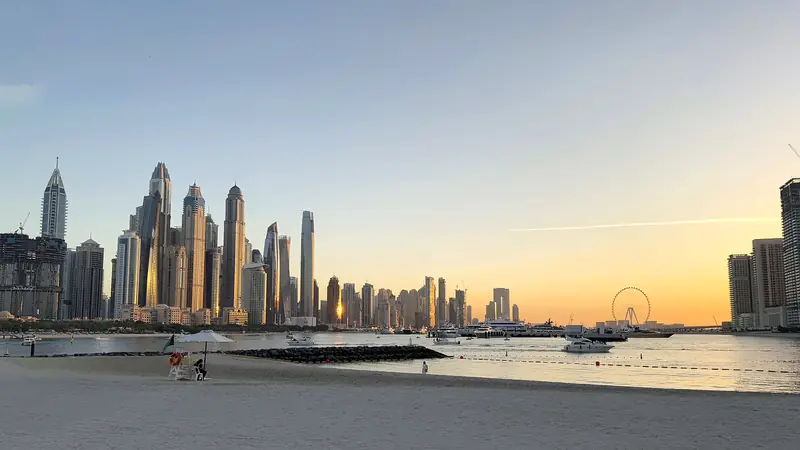
Dubai Marina is one of the most established expat communities in the city. It has a walkable canal promenade, a dense concentration of restaurants and gyms, and direct Metro connectivity. JBR (Jumeirah Beach Residence) sits adjacent and faces the open sea.
Both areas attract a younger professional demographic and founders who work remotely. The trade-off is that apartments can feel small for the price, and the area gets congested on weekends.
Jumeirah, Umm Suqeim, and the beachside villa belt
Running along the coast south-west of the city centre, this stretch of low-rise residential streets is where Dubai’s longer-term expat families tend to settle. The architecture is mostly villas and townhouses rather than towers. There are good international schools nearby and a more relaxed pace than Downtown.
The Metro does not reach here, so a car is essentially required. Many residents consider that a reasonable exchange for the space and the beach access.
Dubai Hills, Arabian Ranches, and Damac Hills, suburban villa communities
These are master-planned communities further inland, built around golf courses and parks. They appeal strongly to families who want large homes, private gardens, and gated streets.
Schools cluster in this part of the city, several well-regarded international campuses are within a short drive. Commuting to DIFC or Downtown takes 25 to 40 minutes by car depending on traffic, which is a real consideration for anyone with regular in-person commitments.
What about Abu Dhabi, RAK, and Sharjah?
Not everyone who sets up a UAE company lives in Dubai. Abu Dhabi attracts those working within ADGM or dealing with the capital’s government sector, and its Corniche and Al Reem Island areas are polished and liveable. RAK offers significantly lower rents for those willing to make the 90-minute drive south to Dubai when needed, it suits founders whose work is genuinely location-independent. Sharjah borders Dubai and is commutable, though traffic on the border can be heavy.
The right choice depends on where your company is registered, where your clients and contacts are, and what kind of living environment you want. For most newcomers, starting in Dubai, then adjusting once you understand the city, is the lower-risk approach. If you want help choosing an area and timing the lease around your visa, our relocation team works through it with newcomers.
Questions people ask
Which area of Dubai is best for families with children?
Jumeirah, Umm Suqeim, Arabian Ranches, and Damac Hills are consistently popular with families. They offer villa-style living, access to international schools, and quieter residential streets. Mirdif is another established family area, often at a lower price point than the beachside communities.
Is it better to rent in Dubai Marina or Downtown Dubai?
It depends on what you prioritise. Dubai Marina has waterfront walks, a lively restaurant strip, and direct Metro access. Downtown is closer to DIFC and the commercial core, and better suited to those spending most of their time in business meetings. Both are high-demand, so neither is particularly cheap.
Which Dubai neighbourhoods have good Metro access?
The Red Line covers Dubai Marina, JLT, Business Bay, Downtown, and DIFC well. The Green Line connects Deira and older parts of the city. Many newer communities, Arabian Ranches, Dubai Hills, Palm Jumeirah, rely primarily on cars or taxis. The Blue Line, under construction and due to open in 2029, will extend coverage to areas including Mirdif, Dubai Creek Harbour and International City.
Can I live outside Dubai and still base my company there?
Yes. Some founders base their UAE company in a Dubai freezone but choose to live in Abu Dhabi, Sharjah, or RAK, often for cost or lifestyle reasons. The company remains in Dubai; your visa is linked to it regardless of where you rent. Commuting from Sharjah or Abu Dhabi is common.
Do I need a UAE residency visa before I can sign a tenancy agreement?
Most landlords ask for a UAE residence visa and Emirates ID before signing an Ejari-registered tenancy contract. Some will accept your residence visa before the Emirates ID is issued. Short-term furnished rentals are available on a visit visa, but expect landlords to want residency for a long-term lease.