
The Eight Principles of Dubai: what they mean if you're setting up here

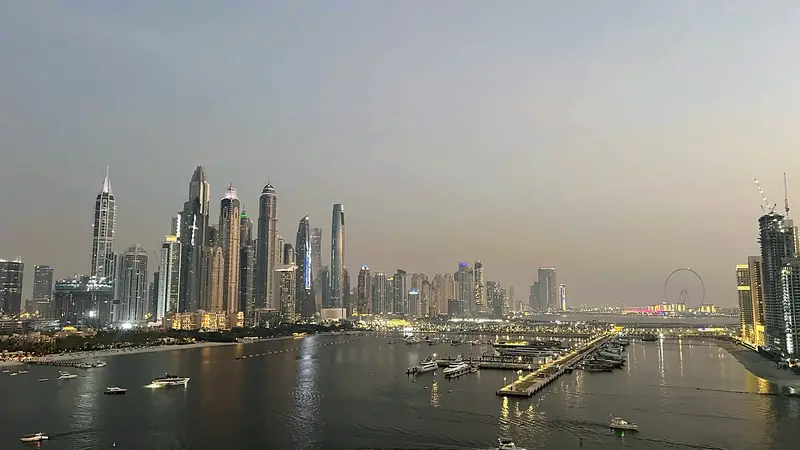
Most of us never read our own country’s plan, because there usually isn’t one we can point to. The UAE is unusual: Dubai’s ruler, Sheikh Mohammed bin Rashid Al Maktoum, set out the Eight Principles of Dubai in 2019, a short, plain statement of how the emirate is run. If you’re weighing up setting up here, it’s worth knowing what they are, because several of them explain why the UAE works the way it does.
The eight principles, in brief
| # | Principle | In plain terms |
|---|---|---|
| 1 | The Union is the foundation | Dubai’s place within the UAE federation comes first; national interest above local |
| 2 | No one is above the law | Justice applies equally, regardless of status, wealth or nationality |
| 3 | We are a business capital | Politically neutral and built around economic opportunity |
| 4 | Three factors drive growth | Government excellence, a vital private sector, and competitive state enterprises |
| 5 | A society with its own character | Tolerance, openness and discipline, free of discrimination |
| 6 | We believe in economic diversification | Constantly creating new productive sectors |
| 7 | A land for talent | Attracting and keeping skilled people is a stated priority |
| 8 | We care about future generations | Stewardship and long-term provision, not short-term thinking |
The ones that matter most if you’re setting up
A few of these are abstract; a few are the actual reasons founders end up here.
“We are a business capital” (3) is the one you feel first. The UAE is deliberately politically neutral and organised around economic opportunity. In practice that means predictability, the rules are pointed at helping you trade, which is exactly what you want when choosing a base.
A vital private sector (4) sets the posture. Growth is explicitly meant to be driven by founders and companies, with government there to enable rather than obstruct. It shows up in how quickly you can set up a company and get a residence visa.
“A land for talent” (7) is why the long-term visa routes exist and keep improving. The investor and Golden Visa routes, long-term residency without an employer holding your status, are this principle made concrete.
“No one is above the law” (2) is the quiet foundation. People talk about tax and lifestyle; far fewer mention that “a real jurisdiction with real banking” means something here precisely because the rule of law sits underneath it.
A blueprint, not a guarantee
It’s healthy to be sceptical of any government statement of intent. The reason these principles are worth taking seriously isn’t that they’re perfect, it’s that they’re written down and largely acted on. A country willing to say plainly what it’s trying to be, and then mostly do it, gives you something rare when you’re making a long-term decision: a clear sense of direction.
That clarity doesn’t replace doing your own homework, on the right structure, the costs, and your own tax position back home. But it does explain why, for so many founders, basing themselves in the UAE feels less like a gamble and more like building on solid ground.
When you reach the structure question, our company formation team can work through it with you.
Questions people ask
What are the Eight Principles of Dubai?
They are a set of governance principles set out by Dubai's ruler, Sheikh Mohammed bin Rashid Al Maktoum, in 2019, a plain statement of how the emirate is run and what it prioritises. They cover the UAE union, the rule of law, being a business capital, the drivers of economic growth, the character of society, economic diversification, attracting talent, and providing for future generations.
Do the principles affect me as a foreign business owner?
Indirectly, but meaningfully. They aren't rules you follow, they're the stated priorities behind the policies you experience. The business-first setup, the talent-focused visa routes like the Golden Visa, and the rule-of-law backbone under banking and contracts all flow from these principles.
Are the principles just marketing?
It's fair to be sceptical of any government statement. What stands out here is that the direction is written down and largely acted on, fast company setup, expanding long-term visa routes, and a consistently business-first posture. Treat them as a clear signal of intent, and judge by what happens on the ground, which broadly tracks them.
Why do the principles matter when choosing where to base a business?
Because basing a business somewhere is a long-term bet. Knowing a country's stated direction, and seeing it followed through, is a form of stability you rarely get elsewhere. For founders choosing a base, that clarity of direction is part of the decision, not just a footnote.